Best AI image generators for fashion photography
The best AI image generator for fashion photography depends on the output you need. Product pages require fidelity to a real garment and repeatable views; editorial concepts need creative range. This comparison separates those jobs and shows what to verify before choosing.
In short
For fashion e-commerce, start with a fashion-specific generator that accepts a real product image and can produce consistent on-model views. For moodboards and campaign concepts, choose a general image generator. There is no single winner for both jobs.
Written by Marco Conte, fashion photographer and founder of rIMAGEx, Milan. Published 8 June 2026; updated 11 August 2026.
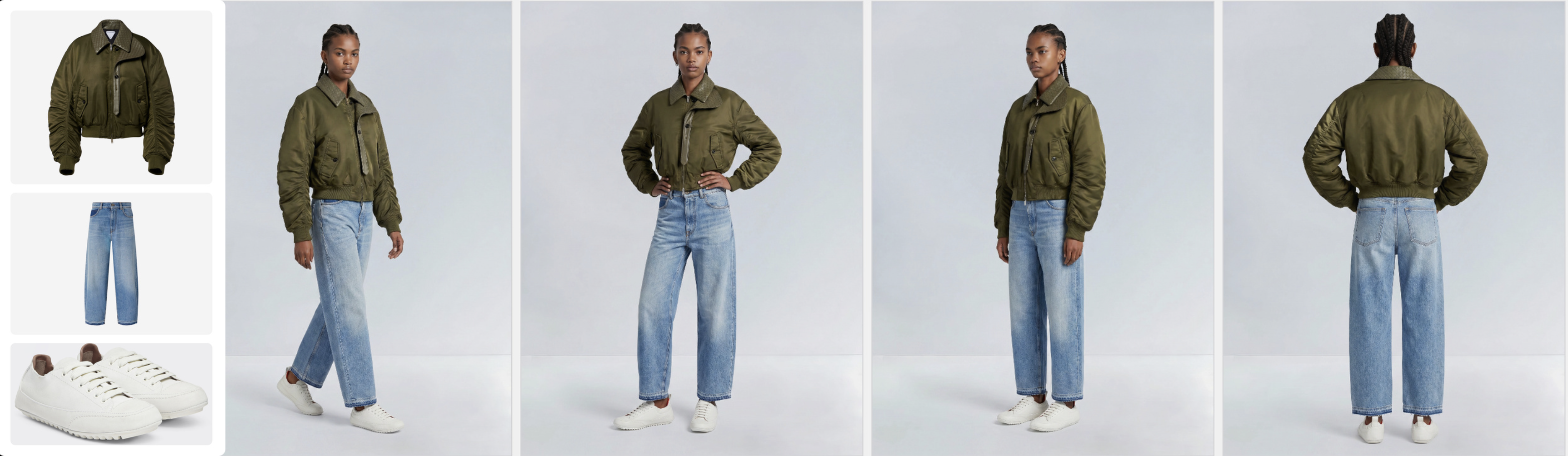
Start from real product photos, build a consistent catalog sequence, then check every view against the inputs before publishing.
How to compare AI fashion image generators
Do not judge a tool from its showcase alone. Test every candidate with the same garment references and the same required outputs, then compare the results using these production criteria:
- Garment fidelity: the image has to show the real product, not a reinterpretation of it.
- Model consistency across front, back, three-quarter and detail views.
- Poses and framing designed for product pages and lookbooks.
- Volume and batch to handle entire catalogs.
- Clear commercial usage rights on the generated images.
This article groups tools by the job they are designed to perform. It does not assign a universal score: output quality changes with the source garment, requested view and workflow. Before committing a catalog, run a small controlled test and compare every generated image with the real product.
AI image generators for fashion photography compared
rIMAGEx Faithful product photos
Built for fashion e-commerce: you upload a garment photo and generate on-model images in product-page poses and views. The workflow is designed to preserve the recognizable product details and maintain visual consistency across a set; the final output should always be checked against the original garment before publication.
Best for: brands and e-commerce teams that need to produce faithful product pages and lookbooks at volume.
Botika
An AI platform for on-model fashion photos aimed at e-commerce, generating models and backgrounds from garment photos. An established option in the AI product-photo segment.
Best for: online stores that want to replace or supplement on-model photography.
Lalaland.ai
A platform that generates diverse AI models for fashion brands, with a strong focus on inclusivity and sizing. Geared mainly toward larger operations.
Best for: mid-to-large brands looking for inclusive, made-to-measure casts.
VModel.ai
An AI fashion model and virtual try-on tool that turns garment photos into on-model shots. Oriented toward speed and automation of the e-commerce flow.
Best for: teams looking for a fast, automated pipeline of on-model images.
Generic generators (ChatGPT, Midjourney)
Great for ideation, mood and conceptual campaigns, but they do not replicate a specific garment and do not keep the same model across shots. Useful upstream in the creative process, not for product pages.
Best for: visual brainstorming and art direction, not the catalog. More on this here.
Quick comparison
| Tool | Best use | Verify before production |
|---|---|---|
| rIMAGEx | Real garments, product pages and multi-view lookbooks | Garment details across every requested view |
| Botika | On-model e-commerce photos | Product fidelity and workflow fit |
| Lalaland.ai | Diverse AI fashion models for larger teams | Available model and integration options |
| VModel.ai | Fast on-model image production | Consistency across a complete product set |
| ChatGPT / Midjourney | Concepts, moodboards and campaign ideation | Whether matching the real garment is required |
Features and pricing of the tools mentioned change over time: always check the latest information on their respective websites.
Which one to choose
If your problem is producing many faithful, consistent product pages without reshooting every time, start from a tool dedicated to garment fidelity like rIMAGEx. If instead you just need inspiration or a conceptual campaign, a generic generator is enough. The question to ask is always the same: does the image have to match the real product, or not.
Frequently asked questions
What is the best AI image generator for fashion photography?
It depends on the need. For product pages you want a tool that replicates the real garment and keeps the same model across multiple views, like rIMAGEx. For background cleanup or still-life product shots alone, simpler and more generic tools exist.
What sets an AI fashion tool apart from a generic generator?
A fashion tool starts from the real photo of the garment and replicates it faithfully on a model, with poses and views designed for e-commerce. A generic generator like Midjourney creates beautiful images but reinvents the garment and does not guarantee consistency across shots.
Can images created with these tools be used commercially?
Almost always yes, but the rights depend on the tool and the plan. With rIMAGEx the generated images are yours, usable commercially with no additional licensing costs. Always check the terms of service of the tool you choose.