The Fabricant alternative: from a sketch to a garment you can sell
The Fabricant turns sketches into beautiful concept imagery. But a concept does not fill a product page. If your sketch has to become the exact garment you put on sale — faithful, controllable, ready for e-commerce and campaign — that is a different job, and it is the one rIMAGEx is built for.
In short
The Fabricant is a digital-first design tool: it reinterprets a sketch to explore shape and drape and to pitch collections before samples exist. rIMAGEx reproduces the garment line for line, gives you an editable tech sheet and fabric references to control it, and outputs e-commerce shots and campaigns you can actually publish. Pitch vs. sell.
Written by Marco Conte, fashion photographer and founder of rIMAGEx, Milan. Published 13 June 2026.

Your sketch
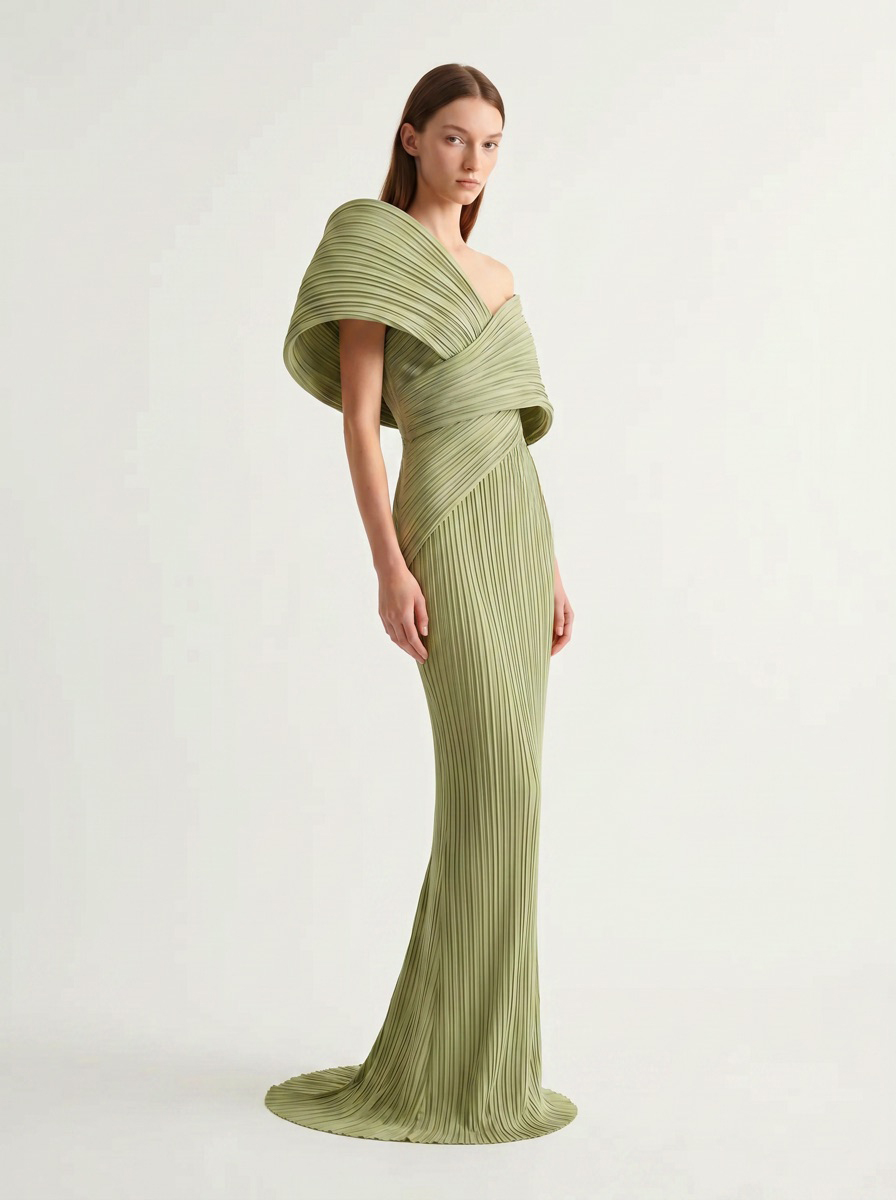

Generated in rIMAGEx, same garment
What The Fabricant is good at
The Fabricant is a digital fashion house with real pedigree in 3D and Web3, and its platform is genuinely strong for creative exploration. The Sketch-to-Image tool turns a drawing into photoreal imagery in seconds, so you can "present collections before samples are made" and pitch concepts to buyers and stakeholders. Its node-based Canvas workflow lets teams chain tools from sketch to a styled shot. For ideation, internal alignment and digital-first design, it is a beautiful tool.
Where it stops — and why it matters
The trouble starts the moment the image has to become a product you sell. By The Fabricant's own framing, Sketch-to-Image is a "creative translation rather than precise technical documentation" — for prints, colours and pattern accuracy you fall back on reference images and an edit pass. That is fine for a concept; it is a problem when buyers expect the garment in the photo to be the garment in the box.
- It reinterprets the design — great for mood, risky for a faithful SKU.
- No written tech-sheet control today: tech pack automation is listed as a feature that is coming, not one you can use now.
- Output is square (1K / 2K) — built for a render, not for product-page and campaign framings.
- It is positioned for pitching and digital fashion, not for e-commerce and a publishable campaign with one consistent model.
What rIMAGEx does differently
rIMAGEx is built around one promise: fidelity to the real garment, with the control to enforce it.
- Sketch Studio reads your drawing into an editable tech sheet — every piece and detail written out. You fix anything before generating. (This is exactly the written control The Fabricant has only promised.)
- Fabric references push the model toward the exact material you designed, not a generic guess.
- E-commerce and campaign in one place: clean on-model packshots and editorial imagery, with the same model across every view.
- Real, publishable framings — not locked to a square render.
- Images are yours, usable commercially with no extra licensing.
- The looks are curated by a fashion photographer, so the aesthetic reads as a real shoot, not a generated one.
rIMAGEx vs The Fabricant at a glance
| Criterion | The Fabricant | rIMAGEx |
|---|---|---|
| Starts from a sketch | Yes | Yes |
| Faithful garment reproduction | Reinterprets (creative translation) | Line-for-line fidelity |
| Editable tech sheet / written control | Coming (not available today) | Yes, before you generate |
| Fabric references | Reference images + edit pass | Per-piece fabric references |
| E-commerce packshots | Not the focus | Yes, front / back / detail |
| Editorial campaign, same model | Editorial tool, separate | Yes, continuity across shots |
| Output format | Square 1K / 2K | Real product & campaign framings |
| Best for | Digital-first ideation & pitching | Selling the real garment |
Who each one is for
Choose The Fabricant if you live in digital-first and Web3 design, you want fast concept renders to align a team or pitch a collection, and faithfulness to a physical SKU is not the point yet.
Choose rIMAGEx if the sketch has to become the garment you sell — if you need the exact piece on a product page and in a campaign, controlled by an editable tech sheet and fabric references, with images you own. For a brand or a designer who has to ship, that is the whole game.
How rIMAGEx works
- You upload your sketch.
- Sketch Studio turns it into an editable tech sheet — you correct every piece and add fabric references.
- rIMAGEx builds the faithful garment on the model.
- You get e-commerce shots and a campaign, ready to publish and sell.
Frequently asked questions
What is the difference between rIMAGEx and The Fabricant?
The Fabricant is a digital-first design platform: its Sketch-to-Image tool reinterprets a sketch into photoreal concept imagery to explore shape, drape and fit and to pitch collections before samples exist. rIMAGEx is built for the opposite job: it reproduces the garment faithfully, line for line, then produces e-commerce packshots and editorial campaigns you can publish and sell, keeping the same model across every view.
Does The Fabricant reproduce a garment faithfully?
By its own description, the Sketch-to-Image tool is a creative translation rather than precise technical documentation — for prints, colours and pattern accuracy it relies on reference images and an edit step. rIMAGEx is engineered around fidelity: the piece that comes out is the one you sell, not a reinterpretation, and you correct every detail in an editable tech sheet before generating.
Can I control the result, like a tech pack?
With rIMAGEx, Sketch Studio reads your drawing into an editable tech sheet — every piece and detail written out — that you can fix before generating, plus fabric references to steer the exact material. The Fabricant lists tech pack automation as a feature that is coming, so that level of written control is not available there today.
Is rIMAGEx a good Fabricant alternative for selling, not just pitching?
Yes. If your goal is to put the garment on a product page and into a campaign — faithful, consistent and commercially usable — rIMAGEx is the better fit. The Fabricant is stronger for digital-first ideation, concept pitching and Web3 / collaborative design exploration.